
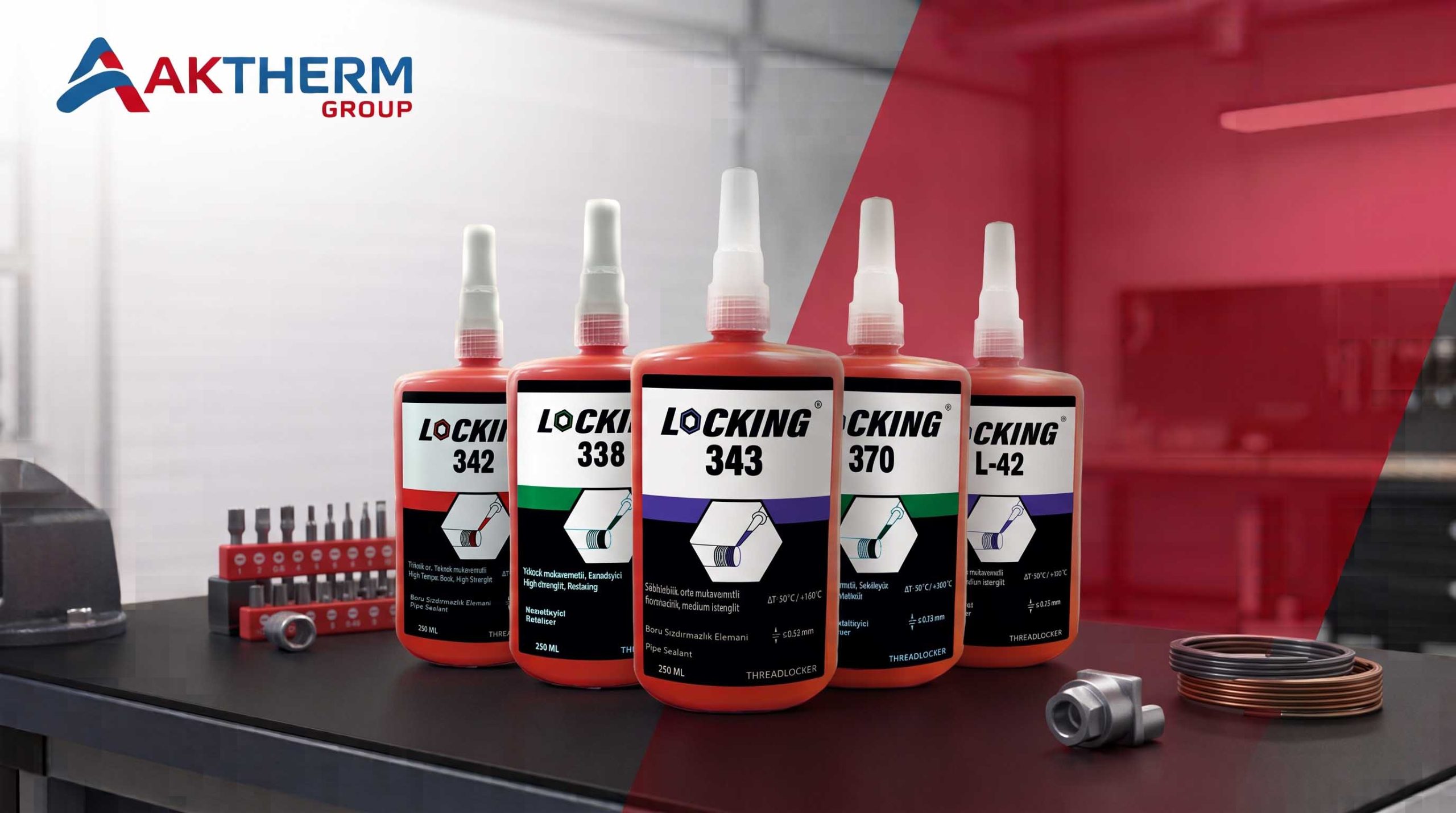
Industrial pipe thread sealants are essential for creating reliable, leak-resistant connections in hydraulic, pneumatic, water, gas, and industrial piping systems. Threaded connections can be exposed to pressure, temperature changes, vibration, mechanical impact, and different fluids, making the selection of the right sealing product an important part of system design and maintenance.
Modern sealing technologies include anaerobic pipe sealants, thread sealant adhesives, industrial sealing adhesives, high-pressure pipe sealants, high-temperature sealants, and chemical-resistant thread sealants. Although these products are sometimes searched for under the broader category of industrial adhesives, their primary function in pipe applications is to seal threaded connections rather than create a conventional structural bond.
The right product depends on the connection material, thread geometry, operating pressure, temperature, transported fluid, chemical exposure, curing requirements, and whether the connection needs to be disassembled in the future.
What Are Industrial Pipe Thread Sealants?
Industrial pipe thread sealants are products designed to prevent liquid and gas leakage through threaded pipe and fitting connections. They are applied directly to the threads before assembly and create a sealing structure between the mating surfaces.
Unlike conventional mechanical sealing methods, liquid thread sealants can fill microscopic gaps and irregularities between threaded surfaces. After curing, the product helps create a continuous sealing layer that can maintain performance under demanding operating conditions.
Industrial pipe thread sealants can be used for:
- Metal-to-metal threaded connections
- Plastic-to-metal threaded connections
- Hydraulic systems
- Pneumatic systems
- Water installations
- Gas installations
- Pressurized systems
- Industrial piping
- Process lines
- Hydraulic equipment
- Pneumatic equipment
- Industrial machinery
- High-temperature metal connections
Because different systems operate under different conditions, there is no single pipe sealant suitable for every application.
How Do Anaerobic Pipe Thread Sealants Work?
One of the important technologies used in industrial thread sealing is anaerobic curing.
Anaerobic pipe sealants cure when air or oxygen contact is restricted between closely fitting mating surfaces. When the sealant is applied to a threaded connection and the components are assembled, the product becomes confined between the threads and forms a durable sealing layer.
This mechanism makes anaerobic products suitable for many metal threaded connections used in industrial equipment and piping.
The general application process is straightforward:
- The threaded surfaces are cleaned.
- The appropriate sealant is applied directly to the threads.
- The components are assembled.
- The sealant remains confined between the mating surfaces.
- The product cures and forms the sealing structure.
- The connection is ready for operation according to the product’s specified curing conditions.
The actual curing time depends on the formulation, materials, temperature, thread configuration, and application conditions.
Industrial Adhesives vs. Thread Sealants
The term industrial adhesives covers a broad category of products used to bond or secure industrial materials. However, not every adhesive is designed for pipe sealing.
Structural adhesives are generally developed to create a strong bond between two surfaces. Thread sealants, in contrast, are formulated primarily to prevent leakage through threaded connections.
There is nevertheless an important overlap between these technologies. Anaerobic adhesives can be formulated for different industrial purposes, including thread sealing, retaining, and related assembly applications.
For this reason, industrial buyers may encounter search terms such as:
- Industrial adhesives
- Anaerobic adhesives
- Industrial sealing adhesives
- Thread sealant adhesives
- Anaerobic pipe sealants
- Pipe sealing products
- Industrial thread sealants
- Adhesives for threaded connections
When selecting a product, the intended application is more important than the generic product category. A product specifically developed and tested for threaded pipe sealing should be selected for pipe sealing applications.
Types of Industrial Pipe Thread Sealants
Industrial piping systems have different technical requirements. Sealant formulations can therefore vary according to pressure, temperature, viscosity, curing speed, chemical exposure, and disassembly requirements.
| Pipe Thread Sealant Type | Typical Application | Key Selection Factors |
|---|---|---|
| Anaerobic Thread Sealant | Hydraulic, pneumatic and industrial threaded connections | Curing mechanism, pressure, material compatibility |
| High-Pressure Pipe Sealant | Pressurized hydraulic and pneumatic systems | Operating pressure, thread type, fluid |
| High-Temperature Pipe Sealant | High-temperature industrial connections | Maximum operating temperature, materials |
| Chemical-Resistant Thread Sealant | Industrial fluids, oils, solvents and chemicals | Chemical compatibility |
| Water Pipe Sealant | Water and plumbing installations | Water compatibility, approvals |
| Gas Pipe Thread Sealant | Gas and pressurized systems | Gas compatibility, pressure and applicable requirements |
| Fast-Curing Thread Sealant | Industrial assembly and maintenance | Curing speed, temperature |
| Low-Viscosity Sealant | Fine threaded connections and specific application conditions | Viscosity, gap filling, application method |
| Removable Thread Sealant | Equipment requiring future maintenance | Disassembly force, sealing performance |
| Plastic-to-Metal Thread Sealant | Mixed-material threaded connections | Plastic compatibility, pressure, temperature |
The table provides a general classification. Actual product selection should always be based on the manufacturer’s technical specifications and the operating conditions of the application.
High-Pressure Pipe Thread Sealants
High-pressure applications require sealing products that can maintain their sealing function under significant internal pressure.
High-pressure pipe thread sealants can be used in suitable hydraulic, pneumatic, and industrial systems where threaded connections are exposed to elevated pressure.
The product selection should consider:
- Maximum operating pressure
- Pressure fluctuations
- Thread dimensions
- Connection material
- Fluid type
- Operating temperature
- Required curing characteristics
Hydraulic systems, pneumatic equipment, industrial machinery, and pressurized process lines may all require specialized thread sealing solutions.
A sealant should not be selected solely because it is marketed as “high strength” or “high pressure.” Its technical specifications should correspond to the actual operating conditions.
High-Temperature Pipe Thread Sealants
Temperature can significantly affect sealing performance.
Some industrial pipe sealing products can operate across temperature ranges of approximately -50°C to +200°C, while specialized formulations may be suitable for applications reaching approximately +250°C.
These products can be considered for:
- High-temperature metal connections
- Industrial machinery
- Process piping
- Hydraulic equipment
- Pneumatic equipment
- Industrial installations
When selecting a high-temperature pipe sealant, the complete temperature range should be considered rather than only the maximum temperature.
Thermal cycling is also relevant because repeated heating and cooling can affect the materials and dimensions of a threaded connection.
Chemical-Resistant Thread Sealants
Industrial piping systems can transport a wide variety of liquids and gases. Depending on the application, the sealing product may be exposed to:
- Water
- Gas
- Oil
- Grease
- Solvents
- Hydraulic fluids
- Industrial chemicals
Chemical-resistant thread sealants are designed for applications where resistance to specific fluids is required.
However, chemical resistance is formulation-specific. A sealant that performs well with water may not necessarily provide the same resistance to a solvent, oil, or another chemical.
For this reason, buyers should always identify the exact fluid and verify compatibility with the selected product.
Pipe Thread Sealants for Metal-to-Metal Connections
Metal-to-metal threaded connections are widely used in industrial machinery, hydraulic systems, pneumatic equipment, process piping, and industrial installations.
These connections may experience significant:
- Pressure
- Temperature variation
- Vibration
- Mechanical impact
- Chemical exposure
A suitable pipe sealant for metal threads fills the small spaces between the mating threads and forms a sealing layer after curing.
Anaerobic formulations are particularly relevant to many metal threaded connections because their curing mechanism is activated when the product is confined between closely fitting surfaces.
Pipe Sealants for Plastic-to-Metal Connections
Modern piping systems may combine plastic pipes and fittings with metal adapters, valves, or other components.
This creates a requirement for plastic-to-metal thread sealants that are compatible with the materials involved.
Before selecting a product, manufacturers and installers should consider:
- Type of plastic
- Type of metal
- Thread geometry
- Operating pressure
- Operating temperature
- Fluid type
- Chemical exposure
Not every thread sealant is suitable for every plastic material. Compatibility should therefore be confirmed before application.
Applications of Industrial Pipe Thread Sealants
Hydraulic Systems
Hydraulic systems operate under pressure and require reliable sealing at threaded connections.
Hydraulic thread sealants can be used in suitable hydraulic equipment and connections where resistance to pressure, vibration, temperature, and hydraulic fluids is required.
Typical applications include:
- Hydraulic machinery
- Hydraulic equipment
- Industrial production systems
- Pressurized hydraulic lines
- Hydraulic fittings
The selected product should be compatible with the hydraulic fluid and operating conditions.
Pneumatic Systems
Pneumatic systems depend on compressed air or gases and require reliable sealing to minimize leakage.
Pneumatic thread sealants can be used for suitable threaded connections in pneumatic equipment and compressed-air systems.
Vibration and repeated operating cycles can place additional demands on the sealing layer, making product selection particularly important for industrial pneumatic applications.
Water Installations
Threaded connections are common in water systems and industrial water installations.
Water pipe sealants can be selected for appropriate threaded connections where resistance to water exposure is required.
Some sealing products are available with appropriate approvals or certifications for drinking-water applications. Where potable water is involved, the exact approval status of the selected product should always be verified.
Gas Installations
Gas systems require reliable sealing because leakage can create operational and safety concerns.
Gas pipe thread sealants are developed for suitable threaded connections in gas-related applications.
Selection should take into account:
- Gas type
- Operating pressure
- Operating temperature
- Connection material
- Thread type
- Applicable technical requirements
Industrial Process Lines
Process piping can carry water, gases, oils, solvents, chemicals, and other industrial fluids.
This creates demanding requirements for industrial pipe sealing products.
The selected sealant should be compatible with both the transported fluid and the operating conditions.
Why Vibration Resistance Matters
Industrial machinery can generate continuous vibration. Pumps, compressors, hydraulic systems, pneumatic equipment, and production machinery may all subject threaded connections to mechanical movement.
Over time, vibration can affect mechanical connections and create potential leakage paths.
Suitable industrial thread sealants can help maintain sealing performance in applications where vibration and mechanical impact are present, provided that the selected formulation is designed for those conditions.
This is one reason why thread sealing should be evaluated as part of the complete connection design rather than as a simple installation accessory.
How to Choose the Right Industrial Pipe Thread Sealant
Choosing the right industrial pipe sealant requires a systematic evaluation of the application.
1. Identify the Connection Material
Determine whether the connection is:
- Metal-to-metal
- Plastic-to-metal
- Another compatible threaded combination
Material compatibility can influence curing and long-term performance.
2. Check the Thread Geometry
Thread size, geometry, surface condition, and fit can affect sealant application and sealing performance.
3. Determine Operating Pressure
The maximum operating pressure and possible pressure fluctuations should be identified before selecting a product.
High-pressure hydraulic and pneumatic systems may require specialized formulations.
4. Determine the Temperature Range
Consider both minimum and maximum operating temperatures.
For demanding applications, high-temperature formulations may be required.
5. Identify the Fluid
Determine exactly what the piping system will transport.
Water, gas, oil, grease, solvents, hydraulic fluids, and other chemicals can have different compatibility requirements.
6. Evaluate Chemical Exposure
If the connection is exposed to aggressive chemicals or solvents, the chemical resistance of the formulation should be verified.
7. Consider Curing Time
Some applications require rapid assembly and short downtime.
In such cases, a fast-curing thread sealant may be appropriate.
8. Consider Viscosity
Viscosity affects how the product is applied and how it behaves within the threaded connection.
Low-viscosity formulations can be appropriate for certain connection geometries and application requirements.
9. Consider Future Disassembly
If the connection will require regular maintenance, a formulation designed for lower disassembly force may be more suitable than a product intended for highly resistant assembly.
Pipe Thread Sealants and Long-Term Sealing Performance
The purpose of a pipe thread sealant is not simply to prevent leakage immediately after installation. Industrial connections may need to remain sealed throughout extended operating periods.
Long-term performance can be affected by:
- Pressure
- Temperature
- Thermal cycling
- Vibration
- Mechanical impact
- Chemical exposure
- Material compatibility
- Thread condition
- Correct application
For this reason, industrial sealing adhesives and anaerobic thread sealants should be selected according to the complete operating environment.
Pipe Thread Sealants for Industrial Machinery
Industrial machinery often combines hydraulic, pneumatic, mechanical, and fluid-handling components.
Threaded connections may be found in:
- Pumps
- Valves
- Hydraulic equipment
- Pneumatic equipment
- Process equipment
- Industrial machinery
- Piping assemblies
In these applications, sealing performance must be considered together with vibration, pressure, temperature, maintenance, and chemical exposure.
A suitable thread sealant adhesive can provide a practical sealing solution when its formulation matches the connection and operating conditions.
Industrial Pipe Sealants for OEM Applications
OEM manufacturers often require consistent sealing solutions for repeated production and assembly processes.
For OEM applications, important factors can include:
- Consistent product performance
- Product specifications
- Application method
- Curing characteristics
- Packaging
- Technical documentation
- Material compatibility
- Production requirements
An OEM may also require different products for different connection types within the same equipment.
For example, a manufacturer may require one formulation for hydraulic connections, another for pneumatic connections, and another for high-temperature applications.
This makes a broad range of industrial adhesives and sealing products valuable for manufacturers that need multiple solutions from a single supplier.
Industrial Pipe Thread Sealants for Export and B2B Supply
International industrial buyers searching for pipe thread sealant manufacturers or industrial adhesives suppliers typically evaluate both product performance and supply capabilities.
Depending on the project, purchasing criteria can include:
- Product range
- Technical documentation
- Application support
- Packaging options
- Consistent manufacturing
- OEM/private label capabilities
- Export documentation
- Production capacity
- Delivery requirements
For distributors and industrial companies sourcing pipe sealants from Turkey, technical product selection and supplier capability should be evaluated together.
Common Mistakes When Selecting Pipe Thread Sealants
Several common mistakes can reduce sealing performance.
Choosing Based Only on Price
The lowest-cost product may not be appropriate for the pressure, temperature, fluid, or material combination involved.
Ignoring Chemical Compatibility
A sealant may perform well under pressure but fail to provide suitable resistance to a particular chemical.
Using a General Adhesive Instead of a Thread Sealant
Not every industrial adhesive is formulated for pipe thread sealing. Products should be selected according to their intended application.
Ignoring Temperature
A product suitable at room temperature may not be appropriate for high-temperature industrial applications.
Ignoring Future Maintenance
If a connection needs to be disassembled regularly, the required disassembly characteristics should be considered before selecting the product.
Selecting Without Considering the Connection Material
Metal-to-metal and plastic-to-metal connections can have different requirements.
Frequently Asked Questions
What is an industrial pipe thread sealant?
An industrial pipe thread sealant is a product applied to threaded pipe and fitting connections to help prevent liquid or gas leakage. It forms a sealing structure between mating threaded surfaces after application and, depending on the formulation, curing.
What are anaerobic pipe sealants?
Anaerobic pipe sealants are sealing products that cure when air or oxygen contact is restricted between mating surfaces. They are commonly used for suitable threaded connections in industrial, hydraulic, pneumatic, and pressurized systems.
Are anaerobic adhesives the same as pipe thread sealants?
Not necessarily. Anaerobic adhesives are a broader category. Some anaerobic formulations are specifically developed as thread sealants, while others are intended for different industrial applications.
Can pipe thread sealants be used for hydraulic systems?
Yes, suitable hydraulic thread sealants can be used for threaded connections in hydraulic systems. The product should be selected according to pressure, hydraulic fluid, temperature, materials, and other operating conditions.
What is the difference between a pipe sealant and an adhesive?
A pipe sealant is primarily designed to prevent leakage, while an adhesive is generally intended to bond materials. Some industrial products combine adhesive and sealing characteristics, but the intended application and technical specifications should determine product selection.
Can thread sealants withstand vibration?
Some industrial thread sealants are formulated to maintain sealing performance under vibration and mechanical impact. This makes them suitable for certain machinery, hydraulic, pneumatic, and industrial piping applications.
What temperature can industrial pipe sealants withstand?
Depending on the formulation, some products can operate approximately from -50°C to +200°C, while specialized solutions may support temperatures up to approximately +250°C. The exact operating limits should always be checked in the relevant technical documentation.
Can pipe thread sealants be used with chemicals?
Some formulations are resistant to water, gas, oil, grease, solvents, and various chemicals. Compatibility must be checked against the specific chemical and the selected formulation.
Can pipe sealants be used on plastic threads?
Some products are suitable for plastic-to-metal or other compatible plastic threaded connections. Compatibility with the specific plastic material should be verified before use.
Are pipe thread sealants suitable for drinking-water applications?
Some products are available with appropriate approvals or certifications for drinking-water applications. The exact certification of the selected product should be verified according to the intended application and market requirements.
Industrial pipe thread sealants provide an important sealing solution for threaded connections used in hydraulic, pneumatic, water, gas, and industrial piping systems. By filling the gaps between mating threads and forming a sealing layer, suitable products can help protect connections against leakage while supporting performance under pressure, temperature variation, vibration, mechanical impact, and chemical exposure.
The right solution depends on several factors, including connection material, thread geometry, pressure, temperature, fluid type, chemical compatibility, viscosity, curing time, and future disassembly requirements. Anaerobic pipe sealants, industrial sealing adhesives, high-pressure thread sealants, high-temperature solutions, and chemical-resistant formulations can each serve different industrial requirements.
For manufacturers, distributors, OEMs, and international buyers looking for industrial pipe thread sealants, anaerobic adhesives, thread sealant adhesives, or pipe sealant manufacturers in Turkey, selecting a supplier with the right technical product range is an important step toward developing reliable and long-lasting sealing solutions.